

By Aline Souza (Institute for Democracy and Sustainability), with the collaboration of Danilo Mekari (ICLEI South America) and Karol Coelho (Sustainable Cities Program)
The fourth seminar in the series "Federal Pact: Municipalities for the 2030 Agenda" held virtual debates on September 28, 29, and 30 to reflect, together with invited researchers, on the integrated and sustainable management of our federated entities, guided by the pursuit of cooperation among them and their challenges.
The objective of this initiative, conceived by the Institute for Democracy and Sustainability (IDS), the Institute for Advanced Studies of USP (IEA/USP), ICLEI South America, the Ethos Institute, and the Sustainable Cities Program, is to take a critical look at our Brazilian federalism, to understand the obstacles to our political governance in a way that is inseparable from a national project that needs to be increasingly sustainable.
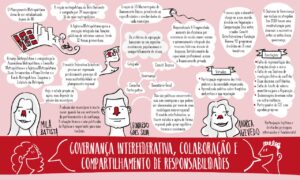
The theme of the IV seminar was Federalism and Cooperation: Challenges of integrated and sustainable management, and on the 28th the focus of discussion was "Interfederative governance, collaboration and sharing of responsibilities". Mila Batista, Director-General of the Development Agency of the Metropolitan Region of Belo Horizonte, said that in the context of the pandemic, the relevance of the chosen theme became quite evident, especially regarding the aspects of common understanding about which measures to adopt to deal with this challenging moment for the municipalities. "Social isolation was not a consensus among the municipalities of the Metropolitan Region of BH, for example, which has almost symbolic limits. The understanding of one municipal administration differs from another with or without a pandemic," she said.
In this sense, Mila showed in her speech that our governance model has had some obstacles since 1988, when municipalities were elevated to the status of federated entities, receiving a portfolio of competencies they did not previously possess. This represents a bonus of the democratic process, but at the same time a burden for the metropolitan planning system, which has been hampered by the lack of a legal model that allows for better articulation between regional and local interests.
“An example of this is the use of water resources, which is something that has a public function of common interest. Every January we face the drama of floods in our region. The Integrated Development Master Plan (PDUI) serves to address issues like this, as does the promise of cleaning up the Pampulha Lagoon. The federal model needs to be legally rethought, because the way metropolitan planning is structured generates dependence on the adherence of municipalities. The 2015 Metropolis Statute was inspired by the Minas Gerais model dating from 1989 precisely because in Minas Gerais, since the 1970s, there has been an understanding of outlining a metropolitan regional development. Although there is this commitment, the RMBH Agency faces bottlenecks in the integrated execution of policies of common interest such as transportation, metropolitan land use which is relevant to our work, environmental protection, housing and mobility, etc. Metropolitan regions in practice are almost a fiction,” stated Mila, who is also a consulting lawyer for the Assembly. Legislative Assembly of Minas Gerais (ALMG).
For Leonardo Góes Silva, Secretary of Water Infrastructure and Sanitation (SIHS) of Bahia, the challenges in his state are also enormous. Although it has two Metropolitan Regions (Salvador and Feira de Santana), Bahia has the largest rural population in the country, with 417 municipalities. “This also hinders an integrated governance policy. To give you an idea, 60% of the capital's water comes from a dam, a pipeline that is outside the metropolitan region. This is a policy that must be integrated and regionalized to deal with the water and sanitation issue. With this in mind, we created 19 micro-regions for basic sanitation here in the state to expand economic and financial sustainability among the municipalities belonging to the blocks, thus anticipating the Legal Framework for Sanitation that was established in 2020,” explained Góes.
According to him, microregional governance is formed by a collegiate body, which includes the governor and the mayors of the municipalities; a technical committee with state and municipal representatives who previously review the related agendas; a participatory council that develops proposals with members of the local and state legislative bodies, as well as members of civil society; and a general secretary who is elected by the collegiate body.
“So far we have managed to implement six micro-regions. The development of regional sanitation plans is underway. Understanding the republican approach to governance and establishing cooperation and public consortia is important. We need to create an inter-federative model that brings together studies to work regionally, in a balanced way, and to attract investments. A large part of the municipalities do not have the technical and/or financial capacity to promote these studies on their own, and there is a deficit between the capacity to generate revenue, both in water supply and sewage treatment, as well as the investment capacity to bring the service to the entire population,” stated the Secretary.
In the same vein of cooperation in integrated management, Andrea Azevedo, Director of Institutional Development at the Sustainable Connections Institute (Conexsus), brought to the debate her experience at the Renova Foundation and in coordinating the reparation of environmental and social damages caused by the Fundão Dam disaster, which occurred in Mariana, Minas Gerais, in November 2015, when the Samarco mining company was responsible for dumping 39 million cubic meters of tailings into the region's rivers. The work involved two states (Minas Gerais and Espírito Santo), approximately 40 municipalities, and other public and private actors across a very wide territorial area.
“Governance is key to solving complex issues, but dialogue is not always easy. What I present here are empirical findings based on my experience with this process. When the spill occurred, the amount of tailings was comparable to the Corcovado mountain in Rio de Janeiro, and this remained within the first 100 km, reaching rivers that flow into Espírito Santo (ES), mainly the Rio Doce, which is the responsibility of the Federal Government because it involves more than one state. The tailings followed a path of almost 770 km,” said Andrea.
According to her, the catastrophic scenario encountered a highly fragmented social fabric, with a high rate of informality among local workers, a chronic situation of misuse of natural resources in the region, a history of conflict with mining companies, and a prior lack of faith in the political system representing the population's ability to deal with these conflicts.
In March 2016, four months later, an extrajudicial agreement (TTAc) was reached between the companies Samarco, Vale, BHP and the Brazilian State, which established a governance system not foreseen in the legal framework until then, formalizing the companies' judicial commitment to repairing and compensating for the damages caused through 42 programs divided into thematic areas: people and community, land and water, reconstruction and infrastructure.
The dialogue would be handled by two entities: the CIF (Interfederative Committee composed of various federal organizations such as IBAMA, ICMBio, ANA, Funai, DNPM, among others) which deliberates and monitors, and the Renova Foundation, a private body that implemented the committee's decisions by executing the actions from August 2016, when the work began. The budget allocated to compensation actions for the companies was R$ 4.5 billion, while the reparation actions did not have an estimated value. At no point did the TTAC involve those affected by the situation caused by mining activities in the region, that is, it did not include the population of the municipalities.
In 2018, another governance model was established, since the initial TTAC model had not been approved by the Public Prosecutor's Office. Only then was the affected population included in the process, establishing a Board of Trustees, Local Commissions with technical advisors, and a Forum of external Observers made up of civil society, social movements, and academia—something that, had it occurred from the beginning, would have resulted in greater clarity and collective construction.
“The biggest lesson from all of this is that there was a significant group of actors from the three branches of the executive branch involved, in addition to organized civil society, discussing the damage and remediation of the Rio Doce in their communities, which resulted in better performance in the environmental sphere. This allowed for the formation of a collective understanding of how to deal with environmental tragedies in our country and their remediation, as well as understanding their complexity,” stated Andrea Azevedo.
On the other hand, Andrea states that the absence of a pre-determined value to be invested in reparation actions gave too much weight to the CIF's deliberations and contributed to the companies involved in the damages being much more involved in the process, hindering and boycotting important decisions in this area. Furthermore, five years were lost at the beginning due to the absence of the population in the dialogues, something that could have been avoided if they had been included in the governance from the outset. This significantly undermined public confidence in the entire process of rethinking the future and development of the region for the coming years.
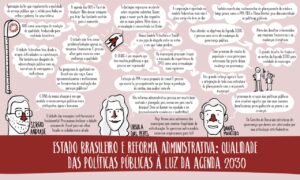
On the second day of the debate, during the panel discussion on "The Brazilian State and Administrative Reform: Quality of Public Policies in Light of the 2030 Agenda," which took place on the afternoon of the 29th, Sergio Andrade, Master in Management and Public Policies (FGV/EAESP), Executive Director of Agenda Pública and member of the National Council for Transparency and Combating Corruption, argued that "the discussion for the public agenda is highly relevant.".
For him, the biggest concern is the quality of public services, and the Sustainable Development Goals are a good benchmark for understanding our reality. “There’s a big difference between narrative and reality. We have a poor track record. Quality research in Brazil is not a reliable indicator.”.
”How much do we know about citizens“ opinions on our services?” he asks. Given the pandemic and with elections ahead, Andrade points out that we have a short period of time for debates on the cities“ agenda. ‘How are we going to meet the growing demand in the coming years?’ He believes this is an opportune moment to understand the SDGs agenda, for example. ”The discussion about ‘leaving no one behind’ has left a very simple, yet very powerful meaning. For me, it means work, income, and social protection,” he said.
Ursula Dias Peres, PhD professor at EACH/USP in the Public Policy Management course, criticized the taxation system that burdens production and consumption and hinders economic and sustainable development. According to her, "the great heterogeneity of Brazilian states and municipalities has always implied very unequal revenue volumes and, consequently, distinct state capacities, which have not been corrected by fiscal equalization mechanisms.".
She explains that "our legislation provides a series of possibilities for the joint and cooperative construction of policies," but that "our federal model, based on indirect taxes, means that states are focused on collecting ICMS (a state-level sales tax) and larger municipalities are focused on collecting ISS (a municipal-level services tax), and this leads to a dispute both between states and between municipalities. It's not a cooperative game, but a competitive one.".
According to her, who was the Deputy Secretary of Planning, Budget and Management for the Municipality of São Paulo, it is necessary to consider a new Federal Pact, and it must be focused on development and sustainability. "For that, we will need to review our tax model and the distribution of the burden between states and municipalities," she stated.
Daniel Mancebo, an employee of the Rio de Janeiro City Hall, presented the process of developing the city's Master Plan in 2011 and the proposed Land Use and Occupation Law in 2013, in which he participated. As a lesson learned, he states that it is necessary to organize governance through listening, starting with the population and identifying their main interests.
“We need to redefine the principles of public governance within our municipal structure, including strategic planning and budgeting,” he says. Regarding the 2030 Agenda, he believes that while municipalities play a crucial role in its implementation, they are not solely responsible. “We need to clearly define the objectives and goals for society and explain how we will achieve them.”.
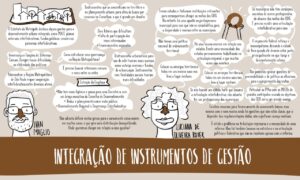
The third day of debates discussed the theme of "Integration of Management Instruments." The debate moderator, Rodrigo Perpétuo, executive secretary of ICLEI South America, began with a thought-provoking question: "How can we generate greater citizen ownership so that governance processes are more effective and have a greater impact?".
Ivan Carlos Maglio, a researcher with the USP Global Cities Program at the Institute for Advanced Studies (IEA/USP), stated that it is necessary to think of cities as centers of knowledge production. He points out that the Metropolis Statute foresees the integration of urban development through instruments such as the Integrated Urban Development Plan (PDUI). “It is necessary to work in an integrated way on a metropolitan scale, outlining the common interests among the municipalities. Today we have a climate emergency that forces us to think in a broad way, not just locally. It is a problem that goes beyond the city.”.
Maglio worked at Emplasa, which for decades was the main metropolitan planning agency of São Paulo, dissolved in 2019. "There is a great difficulty for these councils to be effective in implementing policies," he laments.
In citing the Greater ABC Consortium as a positive example of intermunicipal agreements, the researcher observes that this type of collaboration points to very rich and important paths, creating solutions based on the integrated vision between the cities themselves.
“The climate issue has given rise to more recent agreements, seeking these interactions based on common and real interests. Cities are not prepared for the climate challenge. It is necessary to create a regional plan that articulates the climate issue with urban planning,” he argues.
Luciana de Oliveira Royer, a professor at FAU/USP and executive secretary of the Municipal Housing Council of São Paulo, stated that there is a focus on municipal leadership as the center of the governance arrangement, in order to achieve the Sustainable Development Goals (SDGs). "In Brazil, however, even though municipalities have legal autonomy, there is inter-municipal inequality that is greater than inter-regional inequality," Royer points out.
“"Municipalities alone are not in a position to be protagonists in the implementation of the SDGs. Inter-federative coordination is necessary to achieve these goals." According to her, the federal budget reinforces a direct relationship between the Union and the municipalities, leaving the State out, when it should be involved, especially in actions related to interurban development.”
We must focus on building strong governance, with a strong state that takes on the role of intermediary and seeks to be the facilitator between consortia and agencies,” he believes.
It is evident that there is a need for stronger coordination between the different levels of government, and that municipalities need to be more aware of their importance in relation to the need for cooperation with other entities. The seminar series "Federal Pact: Municipalities for the 2030 Agenda" will continue at the end of October, with debates on transparency, active participation, and citizenship.
 Português do Brasil
  Español
  English (UK)