The 23rd United Nations Climate Change Conference (COP23), in Bonn, Germany, came to an end on November 18, 2017. In this document, we have compiled our most relevant conclusions and an assessment of what this all means for local and regional governments and for global climate action.
1. COP23 proved that the Paris Agreement cannot be contained and is irreversible – and that local governments are important guardians of it.
Local and regional governments played a clear leadership role in this last COP. Now they are in the spotlight, with a voice that is gaining influence over time.
.
This is an important political moment for climate action globally. While initial expectations were for a forward-looking COP, COP23 quickly transformed into a much larger and more significant event.
This happened, at least in part, due to the US announcing its withdrawal from the Paris Agreement last June. This immediately provoked a reaction from thousands of cities and regions, as well as large companies and academic institutions in the US and around the world. In particular, US stakeholder groups firmly stated that they are still engaged in climate action.
Since local and regional governments were officially recognized in the Paris Agreement, they have been taking on a more central role in the conversation about climate change. At COP23, local leaders showed that they are playing an important and consistent role in global climate action.
This edition was a milestone in terms of the size and diversity of the delegation present at the United Nations Framework Convention on Climate Change (UNFCCC) event. The COP23 delegation included 1000 delegates, with over 300 leaders. From South America, more than 40 delegates from 19 cities participated, including mayors from the cities of Rosario (Argentina), Campinas (Brazil), Manaus (Brazil), and Palmas (Brazil), and representatives from cities associated with the ICLEI Network in: Buenos Aires (Argentina), Rosario (Argentina), La Paz (Bolivia), Belo Horizonte (Brazil), Campinas (Brazil), Curitiba (Brazil), Londrina (Brazil), Manaus (Brazil), State of São Paulo (Brazil), Niterói (Brazil), Palmas (Brazil), Porto Alegre (Brazil), Recife (Brazil), Salvador (Brazil), Metropolitan Area of Valle de Aburrá (Colombia), and Quito (Ecuador).
It was also the first time in COP history that an event of local and regional leaders was framed as a collaboration with the Marrakesh Partnership for Global Climate Action – a process through which non-Party stakeholders commit to global climate action. This signals the centrality and importance of subnational governments in driving global progress.
2. National targets are not strong enough and the global emissions gap is huge – This is the perfect time to engage local and regional governments in meeting national commitments and increasing ambitions globally.
According to a recent analysis According to UN Environment, current national commitments cover only one-third of the emissions reductions needed to keep the global temperature well below 2˚C. Furthermore, there are indications that the global carbon budget available for the 1.5˚C scenario will be exhausted by 2030.
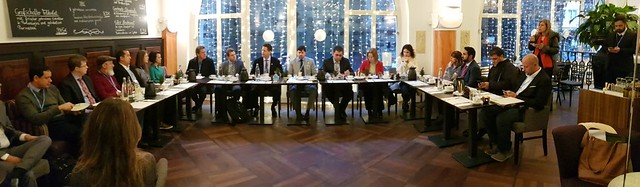
The Climate Summit of Local and Regional Leaders itself was a real demonstration that multi-level governance is not just a concept carried by subnational actors. In fact, this process is gaining increasing legitimacy and importance for national governments. The Summit – co-organized by a multi-level partnership between the City of Bonn and the state of North Rhine-Westphalia – was remarkable in terms of representation from all levels of government.
The theme of multilevel governance and collaboration between levels of government also guided discussions at the Cities and Regions Pavilion in the Bonn Zone. With the participation of representatives from municipal and federal governments in Argentina, Brazil, and Colombia, ICLEI South America brought the debate to the regional context and presented the challenges of implementing the NDC at the local level. Among the main challenges is accessing international financial resources and enabling financing lines for municipalities to support the implementation of the national climate strategy.
O Commitment of Local and Regional Leaders of Bonn, Fiji to Deliver the Paris Agreement at All Levels, The agreement, approved by hundreds of leaders at COP23, highlights that local and regional governments worldwide have committed to doing their part to reduce global emissions: 1,019 local and regional governments reporting to ICLEI on the carbonn Platform have collectively committed to reducing their emissions by 26.8 gigatons by 2050. At the same time, the aggregate impact of the 7,494 cities and local governments committed to the Global Covenant of Mayors for Climate and Energy could collectively reduce emissions by 15.64 gigatons between 2010 and 2030. Furthermore, more than 100 states and regions reporting their data to the CDP platform in 2017 could cumulatively reduce emissions by 21.9 gigatons by 2050.
These commitments signal a strong level of dedication – however, more needs to be done to ensure that local and regional governments can implement policies and action plans to directly support the climate goals of the Paris Agreement. At COP23, through the Local and Regional Leaders' Climate Summit and the Bonn-Fiji Commitment, it became clear that national governments can fulfill their commitments and raise ambitions worldwide if and when they make sustainable urban development a fundamental part of national climate action plans, known as Nationally Determined Contributions, and fully involve all levels of government.
At this moment when nations are defining the set of rules governing the Paris Agreement, it is extremely important to consider the local component in their investment plans, promoting multi-level governance. During Habitat + 1 in Quito, conversations were established with a variety of actors, and from this, Latin American cities, led by the mayor of Quito, Mauricio Rodas, are proposing a Call to Action to Latin American Leaders to press for the vertical integration of NDC implementation strategies. This invitation will be taken to the One Planet Summit, convened by the President of France, Emmanuel Macron, in December.
3. The Talanoa Dialogue opens the door to multi-level and multi-party partnerships – local governments now have the opportunity and the duty to extend this to all cities and regions of the world.
The Talanoa Dialogue – also referred to as the 2018 Facilitative Dialogue – will initiate the process in which nations will review their current climate plans ahead of the next round of NDCs to be submitted in 2020. Its aim will be to improve ambition, especially towards the 1.5˚C target. Local and regional governments, as well as other non-Party stakeholders, have been encouraged to contribute to the process.
It was particularly important that the outcome of COP23 invited countries and other non-Party stakeholders to participate in the dialogue to increase the ambition of the UNFCCC process and for each country. Cities and regions will, as a result, be much better positioned to influence the process and advise or exert pressure on their national governments to do more about the climate and to do it faster.
COP23 brought together a series of initiatives aimed at uniting different levels of government to act on climate change. ICLEI was announced as the first associate member of the NDC Partnership (NDC Partnership), and the Global Covenant of Mayors for Climate and Energy that now connects the European Commission to global local government networks.
4. The progress of the Paris Agreement Work Programme has enabled advancements in building a strong global climate architecture.
The Work Programme of the Paris Agreement was arguably the main item on the COP23 agenda. The evolution of the title of this document, which went from "set of rules" to Implementation Guide to the Work Programme, already reflects that the results of the global processes will provide only basic guidance, while the defining decisions will be made by each country. Once completed, this document will be a detailed set of agreed instructions on how to report progress, align the methodology for accounting for emissions and, in general, implement the Paris Agreement in each country – among other things.
An early draft was released at the end of the COP: a document with more than 250 pages bringing together various positions. The final COP23 results document acknowledged the need for more time to soften some points and called for further sessions in 2018 to continue working on the text, in order to have the document ready for approval at COP24 in Katowice, Poland, in November.
5. The road ahead – we have three critical years ahead of us to protect the Paris Agreement and the global climate.
All levels of government and all stakeholders on the agenda can be encouraged by the growing solidarity across the climate movement, even as the reality of climate change confronts us. Fiji, the nation that presided over this COP, spread an inspiring message of unity. They brought nations and stakeholders together to form a large coalition of climate actors driving global action forward.
Several important events later this year and into 2020 will mark crucial moments for climate action and advocacy.
2017
Macron's Summit: In July, during the G20 Summit, the French president, Emmanuel Macron, announced plans to hold a summit in Paris on December 12, 2017, two years after the Paris Agreement. The One Plane Summit is expected to host a series of announcements and initiatives aimed at Heads of State, including the "Call to Action" document, an initiative led by the mayor of Quito and leader of the ICLEI RexCom for South America, in which Latin American leaders call for greater vertical integration of NDC investment plans.
2018
Starting in January, the Talanoa Dialogue will give local and regional governments an unprecedented opportunity to discuss climate plans with their national counterparts in 2018.
In March, the IPCC Conference on Cities and Climate Change, to be held in Edmonton, Canada, will assess the state of academic and practical knowledge related to cities and climate change and establish a global research agenda based on identifying key gaps in academic, professional and urban policy communities.
At the ICLEI World Congress in June 2018, thousands of representatives from local and regional governments will gather in Montreal, Canada, to showcase their commitments and planned actions to promote urban sustainability.
2018 concludes with COP24, where nations are expected to adopt the final work program for global climate action.
2019
UN Secretary-General António Guterres will convene the 2019 United Nations Climate Summit in New York, at UN headquarters. Like the previous summit in 2014, which spurred the Paris Agreement, this summit will play a key role in ensuring that actions and ambitions accelerate before 2020. The summit may also leverage stakeholder engagement in the UN reform process. The 25th United Nations Climate Change Conference is expected to take place in Latin America between November and December, but the country and city have not yet been determined.
2020
All nations and climate stakeholders need to surprise and the rest of the world in the coming years and send a strong message through these global platforms. We need to reach the 1.5-degree target.
* Adapted version of the original publication. Access the text at [link to original text]. Full text in English.
 Português do Brasil
  Español
  English (UK)