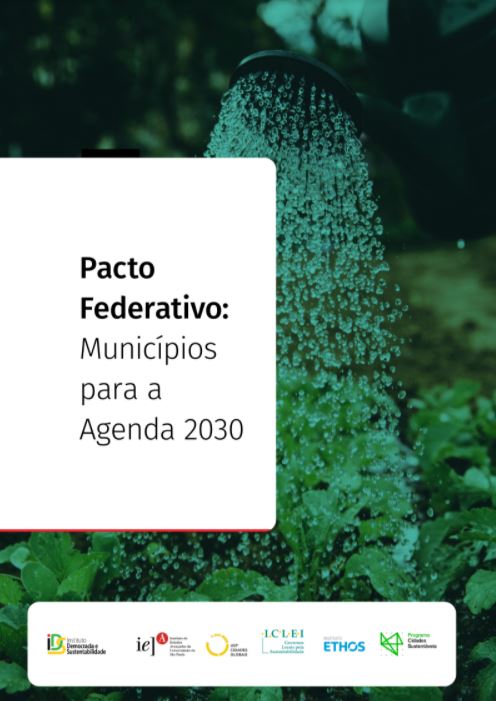
5,570 Municipalities: Autonomy and Financial Health for a Green Economy is the theme of this document, which summarizes the third of five seminars planned in the Federal Pact cycle: Municipalities for the 2030 Agenda. The series of debates, which began at the end of 2019, aims to contribute to the improvement of Brazilian political governance and to the project of a sustainable Brazil, guided by the principle of greater balance in the autonomy of federated entities.
The effects of the novel coronavirus pandemic accentuate the historical difficulties faced by municipalities in fulfilling an unenviable task: meeting the needs of the local population without having the means to guarantee the necessary financial resources. As summarized by economist and IDS associate Eduardo Giannetti da Fonseca, who participated in one of the panels at this seminar, the federalism outlined in the 1988 Constitution decentralized the responsibilities of the public sector, but failed to provide the essential complement of decentralizing the authority to levy taxes.
In the midst of an acute health crisis, a brutal slowdown in economic activity (and tax revenue), and growing socio-environmental demands – such as the climate issue – a large portion of Brazil's 5,570 municipalities find themselves practically powerless.





 Português do Brasil
  Español
 English (UK)