“"I am convinced that we have prosperity to extract from the Amazon rainforest. For that to happen, it has to remain standing. We are the last possible frontier for Brazil's development."”
This is how the mayor of Manaus, Arthur Virgílio Neto, opened the debate “Sustainable Development of Amazonian Cities,” an event that marked the inaugural meeting of... Forum of Pan-Amazonian Cities.
Held on September 22nd, the meeting aimed to identify members and future representatives of the Forum, raising awareness among secretaries from Amazonian cities in Bolivia, Brazil, Colombia, and Peru. The Pan-Amazonian Cities Forum will have as its central objective the creation of channels for the exchange of knowledge and experiences among local governments, establishing a space for joint articulation for the sustainable development of the region.
According to Virgílio, it is necessary to create bonds to unite the various local governments that make up the Pan-Amazon region.“"It is essential to give voice to people of goodwill, to scientists, and to those who are aware of the importance of the Amazon," he stated. "This is a useful and unavoidable meeting, with the participation of leaders who understand that it is not possible to talk about the economy without taking good environmental practices into account."”

The Pan-Amazonian Cities Forum continues the progress established by the Amazonian Cities Pact, which a year ago united Amazonian municipalities interested in investing in economic models that prioritize preserving the forest. Endorsed by Global Covenant of Mayors for Climate and Energy in Latin America, The document was supported by more than 10,000 cities worldwide.
Thematic Agenda
During the event, a thematic work agenda for the Forum was presented, which will revolve around the axes of bioeconomy and the creation of green jobs. According to Sérgio Margulis, from WayCarbon, the central proposal of the Forum is to establish a platform for municipal governments, promoting the exchange of knowledge, practices, and sustainable development models among pan-Amazonian subnational governments.
“Due to various factors, the region lacks investment in modern, high value-added economic activities,” Margulis pointed out, noting that the creation of the Forum is aligned with goal number 11 of the UN Sustainable Development Goals: to make cities and human settlements inclusive, safe, resilient and sustainable.
“We need to think about sustainable urban development focused on the Amazonian context. There are few studies on this topic, even though three-quarters of the region's population lives in cities.”
In addition to the bioeconomy and green jobs, another central theme for the Forum will be the use of cities as promoters of the sustainable use of the forest, the reduction of deforestation, and a more respectful relationship with traditional peoples.
“It is at the municipal level that the potential of the forests can be realized. Knowledge of the forest environment must also be understood and internalized. It is necessary to seek an intermediary between traditional and commercial knowledge, which may eventually boost the local economy and the people who possess this knowledge,” Margulis concluded.
Participations
In addition to the keynote address by the mayor of Manaus, the meeting was attended by representatives from the Ministry of Environment and Sustainable Development of Colombia, the Ministry of Environment of Peru, and the Ministry of Regional Development of Brazil, as well as representatives from municipal organizations and several Secretaries of the Environment.
“How do we integrate urban development with its surroundings?” challenged Gabriel Acosta, from the Peruvian Ministry of the Environment. “This is an outstanding issue, and the Amazon region is not far from it. It is necessary to create connections between national and local governments to make the most of it.” Leticia Pact for the Amazon.”
According to Luis Fernando Obando, from the Colombian Ministry of Environment and Sustainable Development, you can't take care of what you don't know. "It's important for citizens to understand the benefits of natural resources. We need to work on this initiative in that direction," he stated.
Representing the Brazilian Ministry of Regional Development, Laís Andrade highlighted the need for the Forum to fight for the preservation of the region's biodiversity and forests, so that future generations can also benefit from nature. Juan Rojas, from the Colombian Federation of Municipalities (Fedemunicipios), described the environmental interest that the Forum can generate among local governments in the Pan-Amazon region as "immeasurable." "It is a space for sharing significant experiences that will contribute to combating climate change."“
The Secretary of Integration of Porto Velho (Rondônia), Álvaro Mendonça, praised the opportunity to discuss the problems and realities of the Amazon from the perspective of the cities themselves. “I greatly value my land, and having the opportunity to express ourselves in a Forum that provides space for this is very valuable.”
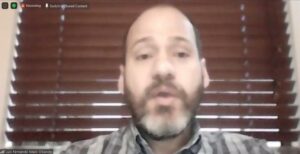
“It’s a commendable initiative,” began Marcelo Thomé de Almeida, president of the Porto Velho Development Agency, “so that we can build an effective agenda to support local development. I believe that the integration of cities is crucial for the region’s development, so that we can interact and strengthen cultural relations and commercial exports.”
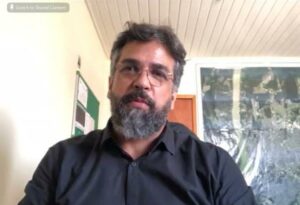
Antonio Nelson, Secretary of Environment and Sustainability of Manaus, emphasized the continuity of the Amazon Cities Pact. “Knowing that we are taking a new step, this time at an international level, with key people for this process, brings great joy. We have a huge commitment to keeping the forest standing and we will not back down from any action that is not in favor of the Amazon.”
“We want to build a sustainable Amazon, in which all the inhabitants of the region have the chance to live with dignity,” observed Ruy Corrêa, Secretary of Economic Development and Planning of Santarém (Pará).
Partners
The Pan-Amazonian Cities Forum is an initiative of ICLEI South America, in partnership with... Konrad Adenauer Foundation, through the Regional Program for Energy Security and Climate Change in Latin Americaa (EKLA), and a WayCarbon.
According to the executive secretary of ICLEI South America, Rodrigo Perpétuo, the intention is for this Forum to establish itself as an international reference for the urban development movement. "This path will allow us to move forward with quality and the possibility of acting for the positive and sustainable transformation of the Pan-Amazon region," he stated.
According to Anuska Soares, coordinator of EKLA, the purpose of the Forum is to generate viable solutions to issues common to the cities.
Next steps
The Pan-Amazonian Cities Forum will be officially launched at an event scheduled for November 4th, during the holding of the Amazon+21 Forum. Until then, the initiative will have representatives participating in the panel “Cities and Sustainable Development in the Amazon Region,” to be held at the same event on October 14, and in the panel “Amazon: Urban Development, Sustainability and Partnership,” on October 20, which will be part of the... Daring Cities, a global event held by ICLEI.
Pan-Amazon
The Pan-Amazon region holds the largest tropical rainforest and the largest hydrographic basin, covering approximately 7.8 million square kilometers, equivalent to 60% of Latin America, encompassing nine countries (Brazil, Bolivia, Colombia, Ecuador, Guyana, French Guiana, Peru, Suriname, and Venezuela). Brazil holds 67.8% of this area.
On the Brazilian side, the Amazon region is made up of the states of Amazonas, Acre, Amapá, Maranhão, Mato Grosso, Pará, Rondônia, Roraima, and part of Tocantins, with an approximate population of 25 million inhabitants, 561,300 of whom are indigenous people, and approximately 25,000 kilometers of navigable waterways within these states.
 Português do Brasil
  Español
  English (UK)