

Last Tuesday (23), ICLEI South America held the first 2026 meeting of the Regional Executive Committee (RexCom) and its General Assembly, bringing together representatives of associated local governments to discuss strategic priorities, strengthen partnerships and align the network's actions for the coming years.
The activities took place in the context of 4th National Meeting of ICLEI Brazil and the International Congress on Civil Protection and Defense, held between June 23 and 25 in Porto Alegre (RS). The event brings together authorities, experts and public managers to discuss solutions aimed at urban resilience and strengthening civil protection and defense policies.
RexCom strengthens regional cooperation and exchange of experiences.
The Regional Executive Committee (RexCom) is responsible for representing the members of each geographic region in the global governance of ICLEI, contributing to the definition of advocacy strategies and to the strengthening of the network's priority agendas.
During the meeting, municipal leaders shared experiences and initiatives focused on climate action, resilience, and sustainable development. Among the highlights, representatives from different cities reinforced the importance of cooperation between local governments to address common challenges and accelerate the implementation of innovative solutions.
Representing the city of Rosario, Argentina, Environment Secretary Luciano Marelli highlighted the strategic value of integrating into a global network like ICLEI. According to him, the exchange of experiences among peers has been fundamental to strengthening institutional capacities, expanding access to financing, and promoting more impactful public policies in the face of the growing complexity of the climate crisis.
Marelli also highlighted the history of collaboration between Rosario and ICLEI in initiatives such as the 100% Renewables Cities and Regions (100% RE) and EcoLogistics programs, as well as the partnership with the Bloomberg Philanthropies Youth Climate Action Fund. According to him, these projects demonstrate how international cooperation can generate concrete opportunities for innovation, technical assistance, and fundraising for local governments.
The meeting also included the participation of Kelly Viana, representative of the Provincial Municipality of Maynas, Peru, who highlighted the relevance of the connections promoted by ICLEI to strengthen cooperation between cities in the Amazon region and expand joint responses to shared socio-environmental challenges.
Thiago Wentzel, Undersecretary of Climate for the Municipality of Niterói, presented advancements in the municipality's climate agenda, which has developed a robust set of technical and legal instruments to guide the implementation of its climate policy. Among the initiatives are emissions inventories, adaptation strategies, risk reduction actions, and climate education programs, contributing to the construction of a more resilient city, better prepared for the impacts of climate change.
During the debates, participants also highlighted the importance of strengthening regional exchange spaces, including strategic events such as the Rosario Climate Week, scheduled for the second half of this year, and the Medellín Climate Week, which continue to expand dialogue and cooperation among local governments in Latin America.
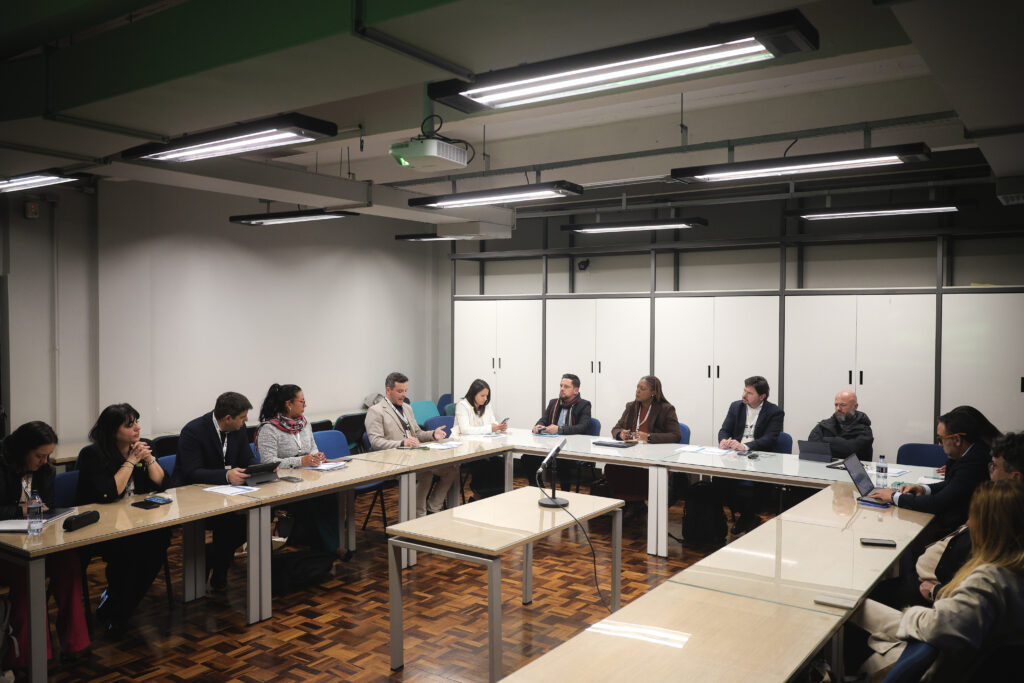
The General Assembly presents results and perspectives for the region.
Subsequently, the General Assembly of ICLEI South America brought together members to present the main results of the last cycle of activities and to share perspectives for the coming years.
Among the highlights was the presentation of new organizational management structure and the launch of the 2024-2025 Activity Report, which highlights the growth of the network's initiatives in the region.
The program also included the participation of strategic partners, such as UN-Habitat, which, together with ICLEI, implements the 34 Climate Action Plans (CAPs) in the State of Rio de Janeiro; MRV, an annual partner of ICLEI in 2026; and CDP-ICLEI, which presented the new cycle of reporting and monitoring environmental data for local governments.
Another highlight was the awarding of the TAP Brasil certificate to the Government of the State of Amapá, in recognition of its progress in promoting sustainable projects and strengthening financing mechanisms for urban development.
ICLEI South America thanks all members who participated in the activities both in person and virtually. The broad participation reaffirms the network's commitment to building collaborative solutions and strengthening local action in the face of the region's climate and sustainable development challenges.
 Português do Brasil
  Español
  English (UK)