

Around the world, cities are leading the way to accelerate the global transition to renewable energy, strengthening their trajectory towards sustainable urban development.
Among the actions taken by local governments are the generation of renewable energy to meet the demand of their own buildings and vehicles; the adoption of targets and implementation of public policies to encourage local renewable energy generation; and support for urban community energy projects.
According to the Global Status Report on Renewable Energy in Cities, produced by REN21, more than 1 billion people – about 25% of the world's urban population – live in a city that has renewable energy targets and/or policies. The document also points out that urban commitments to directly support renewable energy are increasing. In 2020 alone, more than 260 cities established a new renewable energy target or approved a new policy. By the end of the year, more than 830 cities in 72 countries had adopted renewable energy targets.
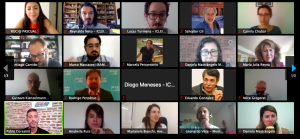
Following this trend, the 100% Renewable Energies project: Roadmap for Cities and Regions held a capacity-building workshop this Wednesday (February 24th), bringing together representatives from cities associated with ICLEI in Argentina to discuss the potential of each municipality to carry out an inclusive energy transition. The event served as preparation for the development of a Roadmap (Hoja de Ruta) towards 100% of renewable energies in the cities participating in the project: Avellaneda (Santa Fe), Rosario and La Plata.
Organized by ICLEI South America and its office in Argentina, the workshop featured lectures and group discussions among the participating cities. The cities also received guidance from ICLEI on the next steps for developing their energy transition roadmaps, particularly on how to collectively develop a vision through their Local Working Groups. Furthermore, the cities were tasked with mapping relevant local stakeholders to further broaden the discussion at upcoming events to define the transition plan.
The 100%ER initiative encourages cities to embrace the energy transition. From a systemic perspective, one that considers all aspects of urban development. “It is extremely important to understand the energy consumption matrix in each city and the origin of this energy production in order to have, in a very assertive way, the perspective of reaching 100% of renewable energy,” stated Rodrigo Perpétuo, executive secretary of ICLEI South America, at the opening of the workshop. “To achieve this, we must involve the population, the private sector, and academia, in addition to a political commitment coupled with a high level of technical capacity from local authorities.”
There are various perspectives on energy transition. The 100%ER, however, aims to establish a sustainable and equitable energy transition that increases access and inclusion through renewable energies. This is what the director of ICLEI Argentina, Maria Julia Reyna, advocated. “The ICLEI is a key ally in building this capacity, encouraging commitment to this agenda, building trust in the supply of innovative and disruptive technologies, and enabling us to walk this path together.”
According to Santiago Garrido, advisor to the Provincial Agency for Sustainable Development (OPDS) of Buenos Aires, "policies at the local level offer enormous opportunities to consider experiences that can be consolidated, especially due to the capacity that local governments have in implementing regulations and incentives at the local level.".
During the event, the case of Costa Rica and its national energy transition roadmap, developed by the NGO La Ruta del Clima, was presented. “The most important thing is to have data to conduct an ongoing discussion, because just as we can move forward, we can also go backward. The transition is an extensive process that must be sustained over time,” noted Adrián Martínez, director and founder of La Ruta del Clima.
The synergies between energy efficiency and energy transition are important, since reducing energy demand enhances the results of switching energy sources, in addition to facilitating access to energy for the most vulnerable populations. "Efficiency is a useful tool not only for mitigating emissions, but also for increasing access to energy," pointed out Salvador Gil, Director of Energy Engineering at the National University of San Martín (UNSAM).
The workshop was attended by the mayor of Avellaneda, Dionisio Scarpin, the mayor of Perez, Pablo Corsalini, the executive secretary of Mercociudades, Marcela Petrantonio, and Anabella Ruiz, from the Renewable Energies department of the Argentine Ministry of Economy.
 Português do Brasil
  Español
  English (UK)