

The Gap Fund Setup Project (Gap Fund SUP), funded by the European Investment Bank (EIB) and the Deutsche Gesellschaft für Internationale Zusammenarbeit (GIZ), and implemented by ICLEI – Local Governments for Sustainability, has concluded its activities. The project aimed to empower selected cities in Africa and Latin America, including 3 Brazilian and 2 Ecuadorian cities (Campinas, Palmas, Rio de Janeiro, Cuenca, and Portoviejo), strengthening their capacities for the development of urban infrastructure projects previously supported by the Gap Fund and assisting in their preparation for investment.
During the Gap Fund SUP sessions, there was a special focus on knowledge exchange and strengthening the technical capacities of key cities through personalized support and interactive sessions. These included peer-to-peer learning exchanges using the cooperative cycle methodology implemented by ICLEI, complemented by Regional Communities of Practice (RCoMPs), created to foster lasting collaborations between cities and share knowledge within a broader regional community.
Based on the methodologies and products offered by ICLEI to its members, four Regional Community of Practice (RCoMP) working sessions were conducted. They focused on Nature-Based Solutions and Water Management, exploring options for financing projects in these sectors, especially the mobilization of private capital for operation and maintenance.
Session 1: Practical Examples of Developing Nature-Based Solutions and Water Management
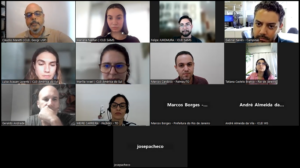
In the first session, practical examples from other cities, in addition to those participating in the Gap Fund SUP, were presented on the development of nature-based solutions and water management projects. The objective was to allow the exchange of experiences between the main cities of the Gap Fund, the RCoMP cities, and external stakeholders. This session included Gap Fund cities, sector experts, government representatives responsible for the sector/service, and other cities with successful case studies. The focus was on alternative models for financing and implementing linear parks and water resource management projects, highlighting examples of best practices. Furthermore, the session featured an exchange between members of the extended community of practice who shared their experiences with the five main cities of the project.
At the beginning of the session, ICLEI partners were invited to present success stories in implementing Nature-based Sustainability (NbS) projects and in water resource management. The following participated in this session:
- Daniela Rizzi, Senior Officer of Biodiversity, Green Infrastructure and NbS at ICLEI Europe
- Wellington Tohoru Nagano, director of the Urban Projects Division of the city of São Paulo
- Gabriel Dias Mangolini Neves, environmental engineer at the Secretariat of Green Areas, Environment and Sustainable Development of Campinas
- Guillermo Piñones, regional focal point for the GCoM in Latin America and the Caribbean (Gap Fund)
- Sergio Aranguren, biodiversity coordinator at ICLEI South America
Session 2: Project Development and Financing Instruments
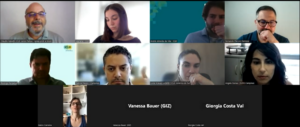
In the second session, participants explored the various stages of project development and the activities associated with each phase through case studies and practical examples. The session familiarized participants with relevant funding sources and financing instruments, specifically those applicable to private sector engagement. This included insights from Gap Fund cities, industry experts, government representatives responsible for the sector/service, and other cities with successful case studies in private sector involvement. The focus was on alternative financing models with an emphasis on mobilizing private actors. Furthermore, the session featured an exchange between members of the extended community of practice who shared their experiences with the five main cities in the project.
The session highlighted the sharing of experiences and success stories in mobilizing private sector actors to enable projects. Participants included:
- Thiago Grego, vice-president of IPGC
- Renato Rosenberg, director of concessions at the Brazilian Forest Service
- Carolina Estrella, director of Environmental Management at the Consorcio de Gobiernos Autónomos Provinciales del Ecuador (CONGOPE)
- Grace Yépez, co-founder and manager of YES Innovation
Session 3: Project Preparation and Additional Technical Assistance
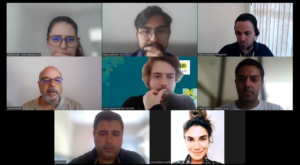
In the third session, participants explored the various stages of project development and the activities associated with each phase through case studies and practical examples. The session familiarized participants with relevant funding sources and financing instruments, specifically different project preparation facilities and opportunities to access technical assistance complementary to that already received from the Gap Fund. This included insights from industry experts and government representatives responsible for the sector/service. The focus was on guiding projects to the next step and bringing in representatives from financial institutions operating suitable project preparation facilities for projects that have completed Gap Fund support. Furthermore, the session featured an exchange between members of the Extended Regional Community of Practice, who shared their experiences with the four main cities participating in the Gap Fund SUP.
The session aimed to explore the stages of project development and the activities involved in each, through case studies and practical examples. Participants included:
- Francisco Porto Macedo, senior program associate at the Cities Climate Finance Leadership Alliance (CCFLA/CPI)
- André Almeida da Vila, from the Innovative Finance area of ICLEI WS
- Martina Ferrarino, Regional Engagement Manager for Latin America at the C40 Cities Finance Facility (C40/CFF)
- Gabriella Costa Ferreira, Regional Officer of the Global Fund for City Development (GFCD)
Session 4: Exploring Additional Forms of Financing
In the fourth and final session, cities explored additional ways and instruments to finance Nature-Based Solutions and water management projects, with a particular focus on options that ensure the long-term sustainability of these initiatives. Building on previous discussions on Project Preparation Facilities (PPFs) and private sector engagement through Public-Private Partnerships (PPPs) and concessions, this session broadened the dialogue by examining other mechanisms such as local funds, environmental fees, payments for ecosystem services (PES), Land Value Capture (LVC), carbon markets, parliamentary amendments, among others. The goal was to conclude the RCoMP sessions by exploring diverse financing mechanisms that not only support the implementation of local projects but also ensure their sustainable maintenance over time.
These sessions not only strengthened the capacities of the participating cities, but also established a solid foundation for future collaborations and sustainable developments in their respective regions.
 Português do Brasil
  Español
  English (UK)