

The second edition of the “Citizenship Program: Climate on the Legislative Agenda,” which aimed to promote dialogue between the population and municipal public authorities focusing on the climate agenda, concluded with an online event on Monday, February 13th. Through this initiative, citizens were able to deliberate on the creation of draft laws and public policies in the three cities selected to host the Citizen Assemblies: Francisco Morato (São Paulo Metropolitan Region), Salvador (capital of Bahia), and Toritama (interior of Pernambuco). The participating municipalities guarantee that they will replicate the participatory experience for other issues that affect the daily lives of citizens.
The second edition of the Delibera Brasil Program, which partnered with ICLEI South America and the School of Parliament and was funded by the National Endowment for Democracy (NED), began in January 2022. In total, 43 cities from 14 states and all regions of Brazil applied. The selection process included a 15-hour workshop with 13 pre-selected municipalities.
Silvia Cervellini, Co-Founder of Delibera Brasil, highlighted that the organization has been sowing the seeds of citizen deliberation since 2020. "Now, we are reaping the rewards and have reached a point where we are confident that this path of participatory and citizen-led technology is very promising for Brazil."“
The Executive Secretary of ICLEI South America, Rodrigo Perpétuo, highlighted that the organization's strategic vision for sustainable urban development is based on five pillars: low carbon; nature-based; resilient; circular; equitable; and people-centered. “The Decidadania initiative reaffirms a value that is inseparable from the sustainable development process, which is democracy. We need to scale up the debate on climate change in society, and this initiative plays a prominent role in sharing information and decentralizing decisions with the population.”
Francisco Morato
The Citizen Assembly of Francisco Morato, a city that joined the ICLEI Network during the program's development, was held by the City Hall in partnership with the Municipal Chamber and aimed to deliberate on the question: "How to build basic sanitation accessible to all?". The municipality conducted a broad public call for "Delibera Morato" through the sending of 2,000 letters, an online form disseminated on social networks, and active recruitment in busy areas of the city. Approximately 40 residents participated in meetings between October and November 2022, culminating in a document of recommendations with deliberations on 5 themes related to waste management: Construction Waste Plant; Disposal and transshipment site; Collection, transport and logistics service; Selective collection and recycling; and Inspection, penalties and incentives. The initiative was welcomed by the City Hall and the Municipal Chamber, which signed and filed the document, an act that institutionalizes the recommendations.
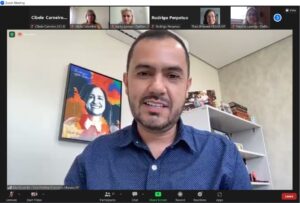
Deputy Mayor Ildo Gusmão highlighted that there are many issues to be addressed with the population through participatory methodology. “The Citizen Assembly brought about a great deal of popular engagement. We only had one experience in this regard, but nothing compared to what this project was like, from which we learned something new every day. It was very comprehensive, both in terms of territory, age, and ethnicity.”
Salvador
The “Citizen Assembly for the Climate of Salvador” was implemented by the mandate of councilwoman Maria Marighella, from the Mixed Environmental Parliamentary Front of the Municipal Chamber, and was guided by the following question: “Which actions of the Climate Change Mitigation and Adaptation Plan (PMAMC) of Salvador should be prioritized for the execution of the municipal budget in the four-year period of 2022-2025, taking as a reference the current Multi-Year Plan (PPA)?”.
The initiative involved 39 participants, selected through door-to-door recruitment and an online form. Throughout the six sessions, the group was able to understand the objectives, listen to and question experts and spokespeople with different perspectives, and evaluate alternative scenarios to prioritize investments in actions planned in the PMANC for the next 4 years.
Among the group's recommendations, the following stand out: investment of R$133 million in prioritizing actions for the implementation of the cycle path network and the installation of bicycle parking facilities near public transport terminals; renewal of the fleet of large vehicles, with a recommendation to execute resources in the order of 501 of the planned budget (savings of R$600,000 reallocated to other prioritized actions); expansion of accessibility in BRTs, with investment in integration with other modes of transport, use of renewable energy for their operation, hiring of local labor, in addition to reforestation to mitigate damage; maintenance of actions to create a composting plant and drainage and slope recovery; and creation of a popular council to monitor the implementation of the PMAMC and other actions decided by the Citizen Assembly.
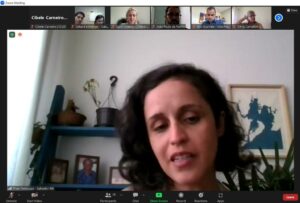
Thaís Rebouças, Advisor to the Mixed Parliamentary Environmentalist Front and representative of councilwoman Maria Marighella, highlighted that models of popular participation generally remain in the realm of public consultation and not deliberation. “It was very interesting to work with an audience that is not activist or…” expert. People got involved even without being familiar with the topic, using two planning tools that many had never encountered before. An important factor in people's engagement was precisely that they knew they were actually deliberating on something. We will push for more initiatives like this.”
Toritama
In the small municipality of Toritama, in the Pernambuco hinterland, the Citizen Assembly was titled "Breathing Pure Air" and had as its guiding question "How can industrial laundries produce without polluting the air?". With its economy based on the garment industry, Toritama is responsible for 17% of Brazil's annual jeans production. However, this activity has a high environmental and public health impact. In addition to using a lot of water, a scarce resource in the region, the approximately 70 industrial laundries installed in the municipality use boilers. "Some of the laundries burn fabric scraps and waste in the boilers, generating many respiratory problems in the population," says Juliana Lilian de Souza Nunes, Advisor to Councilor Carol Gonçalves, who proposed holding the Citizen Assembly in the municipality in partnership with the City Council.
With the support of experts, over eight meetings from November to January, 40 participants volunteered for the initiative through an online form and active recruitment. As a final result, the group produced a report with several recommendations such as: the use and specification of filters to reduce the emission of polluting gases from boilers; specific parameters for the use of chemical substances and combustion materials; mandatory reuse of water in laundries; mechanisms for monitoring the disposal of waste and residues; penalties for offenders; and the possibility of tax incentives and partnerships (sectoral agreements) for establishments that use sustainable technologies and good circular practices in the production process.
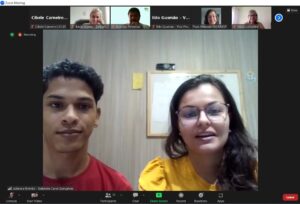
“We never had a participatory action in the municipality and, with Decidadania, we managed to bring together diverse profiles from all over the city,” said Juliana. Brendo Hoshington da Silva, also an advisor to the parliamentarian, stated that the program was a milestone for the city and the participation model will be replicated for other issues. Corroborating his colleagues in the Chamber, the Municipal Secretary of the Environment, João Paulo da Rocha, highlighted that the City Hall is prepared to disseminate the methodology and work with the population on other issues.
Cibele Carneiro
 Português do Brasil
  Español
  English (UK)