New York, September 1990. During the First World Congress of Local Governments for a Sustainable Future, held at the United Nations Headquarters, an alliance of 200 local governments from 43 countries resulted in the founding of the International Council for Local Environmental Initiatives (ICLEI). By 2003, the organisation was renamed ICLEI – Local Governments for Sustainability.
In September 2020, ICLEI marks 30 years of existence. Over these three decades, the organisation has expanded its influence to all continents on the planet, and has established a network involving around two thousand local and sub-national governments.
ICLEI's work in Latin America began in 1994. Two years later, the first office in the region was opened in Santiago (Chile). In 2000, this regional office moved to Rio de Janeiro (Brazil). Then, between 2006 and 2010, the city of Buenos Aires (Argentina) was chosen as the headquarters for the Secretariat for Latin America and the Caribbean.
The year 2011 marked the start of a new model for ICLEI's operation in the region, with activities split into two secretariats: one for South America, based in São Paulo (Brazil), and another for the Mexico, Central America and the Caribbean, established in Mexico City. Recently, the Secretariat for South America gained the support of regional offices in Bogotá (Colombia) and Santa Fe (Argentina) for the execution of projects in the region.
In an interview, the current Executive Secretary of ICLEI South America, Rodrigo Perpétuo, reflects on the commemorative date. “”This anniversary represents a turning point for the organisation towards maturity," bets Perpétuo. Already Pedro Jacobi, chairman of the organisation's Governance Council since 2011, sees ICLEI's 30th anniversary as an opportunity to strengthen regional action. “In South America, there's a procedure for local governments not just to join the network, but also to get involved with ICLEI.”
Check out the interviews below:
What does ICLEI's 30th anniversary represent for the South American secretariat?
Rodrigo Perpétuo: Reaching 30 years of age is an important milestone for any institution. For ICLEI South America, this anniversary represents a turning point for the organisation, leading towards maturity, consolidating movements related to internal management and organisation, and preparing the entity to generate ever-increasing added value for its associated local governments and for all partners and funders.
Pedro JacobiI have always been interested in urban themes, and since the 1990s I have also been involved with environmental themes. In my view, ICLEI's agenda has always been innovative, but with a somewhat fragmented profile.
This agenda has been strengthening since the mid-2000s, when the theme of climate change gained more visibility and concrete solutions in urban management. Resilience, urban biodiversity, circular economy, and reduction of greenhouse gas emissions are part of a set of aspects that characterise ICLEI's actions.
I have been President of the Board of Directors since 2011 and have been following the trajectory of ICLEI South America ever since. We now have a very solid and consistent Board which has strong dialogue with management. I currently see a movement of expansion in the region. If we already had activities and actions with various Latin American cities, this number has been growing in the last three years, with the accession of important governments, such as the Medellín Metropolitan Area in Colombia and the province of Santa Fe in Argentina. At the same time, ICLEI South America has been strengthening itself through its partnerships and new institutional projects.
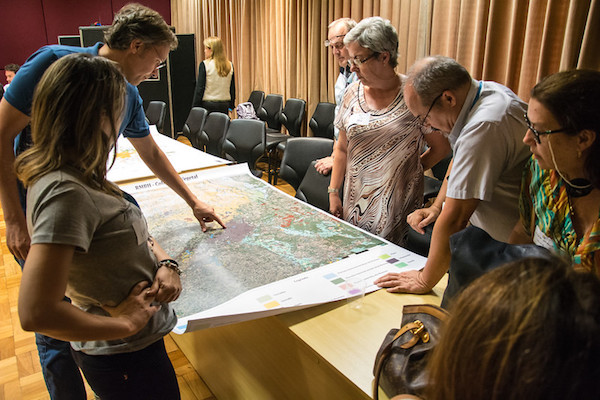
2) What are the particularities you would highlight in the work of ICLEI South America?
RoleplayThe first peculiarity is that ICLEI's work in our region is also permeated by the challenge of social inequalities. We cannot shy away from this commitment to permanently reduce them, which imposes an additional complexity and challenge to our actions.
Regarding the history in the region, I believe the peculiarity lies in the fact that the Secretariat's headquarters has already been based in four distinct cities: Santiago, Buenos Aires, Rio de Janeiro, and currently, São Paulo. The decentralisation model we are implementing will bring ICLEI ever closer to its associates and will increasingly understand the political-institutional contexts that permeate each of the South American countries. The opening of offices in Colombia and Argentina is a very significant step in this direction.
PJI see that, in South America, we are strengthening the dialogue between associated local governments. We still have an operation that is very Brazil-centric, but there is an increasing effort to bolster our work in South America. In this regard, I believe that ICLEI – by gaining the adherence of a metropolitan region in Colombia, such as Medellín – will have great potential for expansion.
In South America, there is an operation, management, and adherence procedure so that governments do not simply link up to the network, but also engage with ICLEI. There is a group of Brazilian cities with very strong adherence, and this means having a technical body available for dialogue with local governments. It is not a simple task.
In its three decades of existence, the ICLEI's global network of subnational governments already boasts nearly two thousand cities, states, and metropolitan regions. How do you envision ICLEI's next 30 years?
Roleplay: ICLEI's challenge is to reinvent itself and realise that it is no longer enough to propose and foster advocacy actions and campaigns for sustainability commitments (which remain fundamental), but also to find ways to act more concretely on the ground, in partnership with local organisations, fostering transformation to an ever-greater extent through programmatic, robust, scalable and replicable actions.
I see this is the way for ICLEI to remain big and relevant amid an ecosystem that is increasingly receiving networks and associations of local governments.
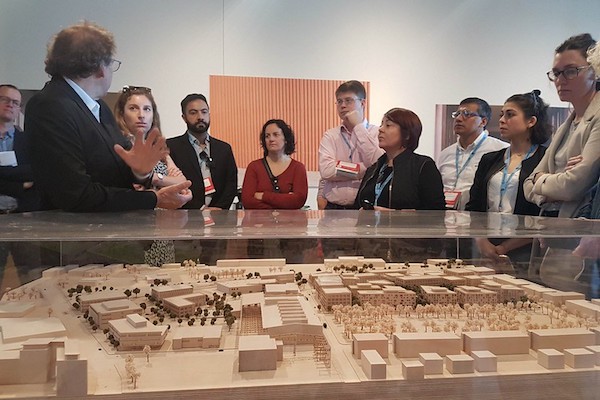
PJI want to see ICLEI become increasingly robust, with its fundamental role in disseminating practices to promote actions for urban sustainability.
Over the next 30 years, the climate change scenario is worrying. It is a major challenge for cities to prepare for this, and ICLEI has an agenda that can promote the reduction of the impacts of this change and advance ever further in programmes that allow for the development of adaptation and mitigation plans, as well as stimulating the reuse of materials and conscious consumption that represent the circular economy.
Globally, we see in most continents – particularly in Africa, Asia, and Latin America – cities that increasingly exhibit aspects of inequality and social vulnerability. ICLEI plays a very important role in reducing environmental liabilities and strengthening good practices and sustainable policies that have an impact on equity itself and the reduction of this vulnerability and inequality.
The participation of civil society organisations is essential to encourage the transformation of public management into sustainable management. We live in a society that produces its own risk and we also need to produce forms of urbanisation that are more resilient and change inadequate and unsustainable practices in cities: we cannot have contaminated rivers or landfills in urban territory; we cannot lose biodiversity in our cities nor prioritise individual transport. On its agenda, ICLEI has the expertise and technical knowledge to replace this “we cannot” with programmes, projects and actions for urban sustainability.
 Português do Brasil
  Español
  English (UK)