The workshop brought together representatives from Guaviare, Amapá and Catalonia for three days of technical exchange, multi-sectoral dialogue and collective building of pathways for climate action in the Amazon.
San José del Guaviare, in Colombia, hosted the Guaviare Territorial Workshop between August 26 and 28, held within the framework of the project Catalonia for the Amazon: Climate Justice and Equality.
For three days, representatives of the governments and technical teams of Guaviare and Amapá, partners from Catalonia, specialists and representatives of different sectors participated in a program focused on the exchange of knowledge, institutional strengthening and the collective construction of strategies to advance towards a fairer and more inclusive climate governance.
The meeting is part of a broader process of international cooperation between territories and seeks to connect different stages of the project, including territorial and institutional diagnoses, the development of tools for fair and inclusive climate governance and the building of future cooperation initiatives and territorial action.
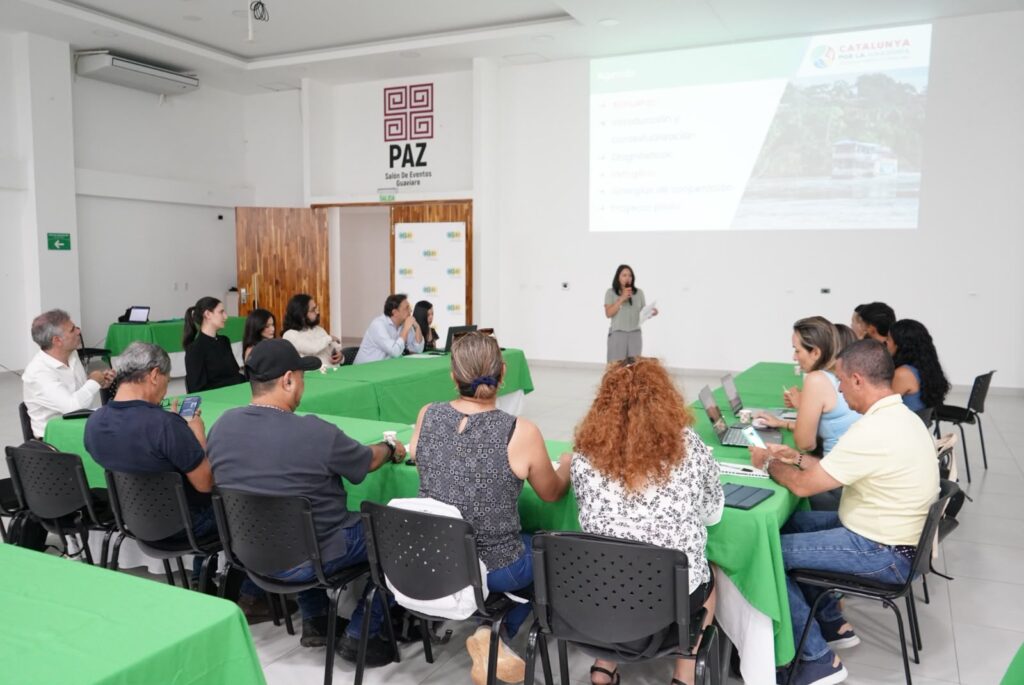
Diagnoses as a starting point
The first stage of the workshop was dedicated to a technical work agenda, focusing on the presentation, validation and discussion of the results of the diagnoses developed for Guaviare and Amapá.
The studies analyze climate policies and instruments, institutional capacities, governance arrangements and opportunities to strengthen climate action, from a cross-cutting perspective of gender equality, human rights and climate justice.
In the case of Guaviare, the assessment reveals the existence of an existing institutional framework and relevant experiences upon which the department can build, including spaces for climate and environmental governance, sustainable territorial planning strategies, and international cooperation initiatives. At the same time, it identifies challenges related to strengthening institutional capacities and more systematically incorporating gender and human rights perspectives into climate action.
In Amapá, the assessment indicates a recently consolidated climate regulatory framework, institutionalized spaces for participation, and significant socio-environmental assets. Among the challenges identified are the gap between regulatory instruments and their implementation, the need to strengthen institutional coordination, and the more effective integration of climate justice, human rights, and gender equality agendas.
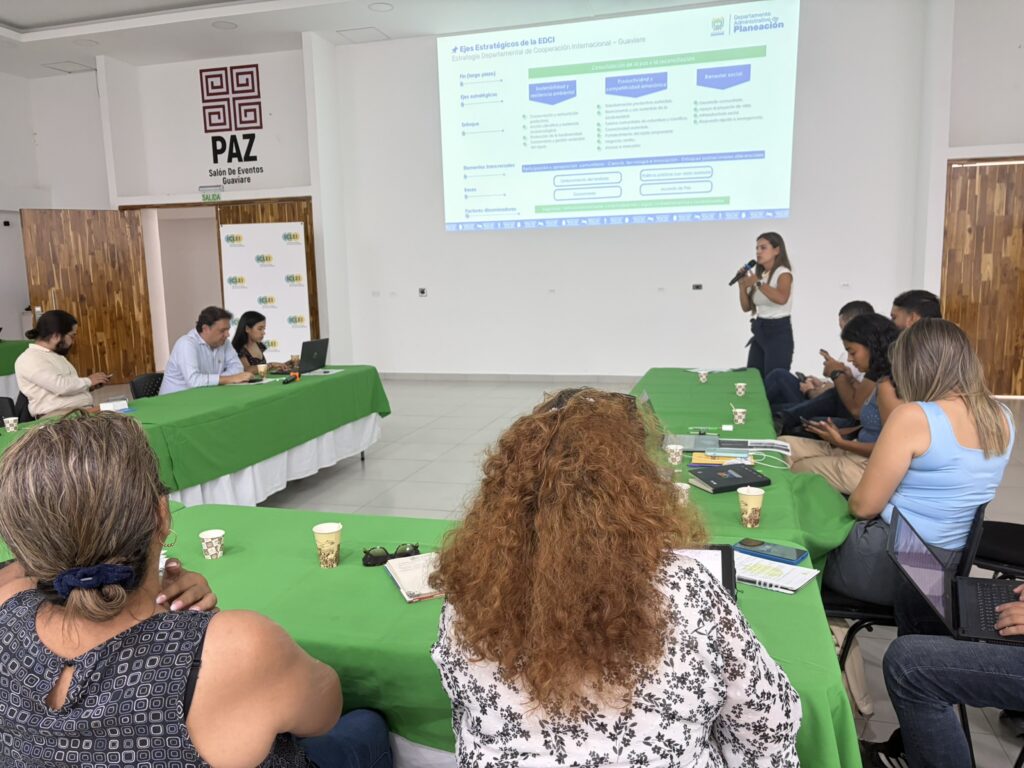
According to Felipe Jukemura, regional technical coordinator for ICLEI South America, the assessments provide relevant information for the territories by combining a global perspective with a careful analysis of existing institutional and political capacities. “These results can guide strategic decisions and contribute to the formulation and improvement of public policies aimed at more inclusive climate action. Furthermore, they offer input for designing the next stages of cooperation with Catalonia, from defining pilot projects to developing—by project participants—national and international policy advocacy strategies.”.
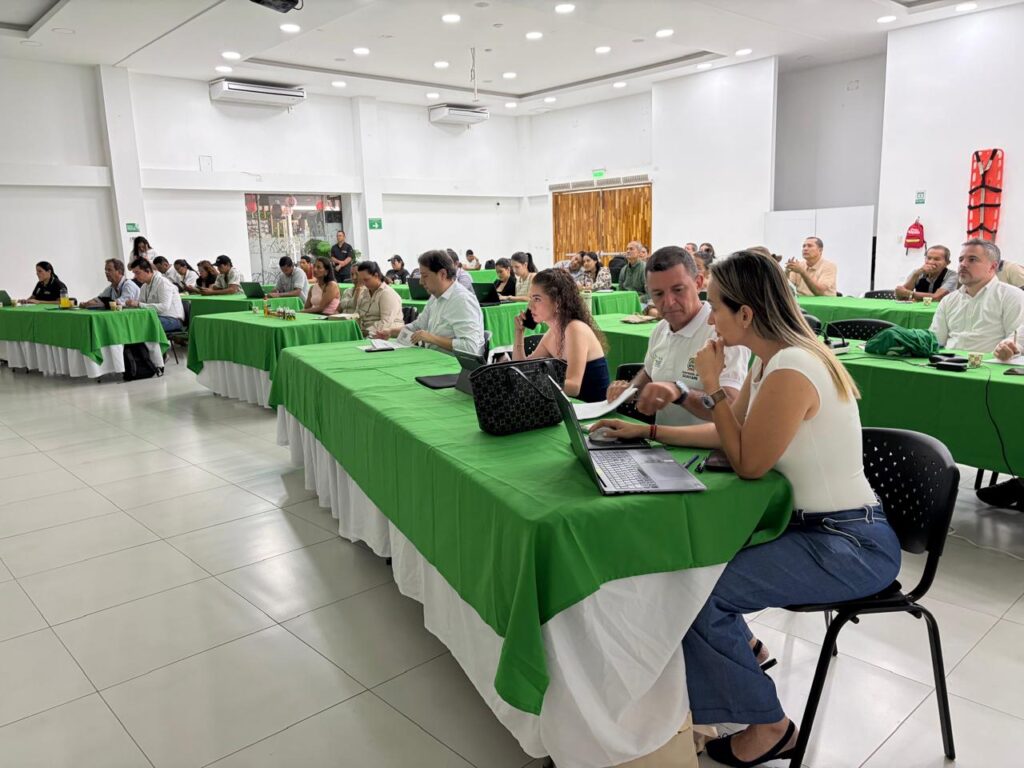
Dialogue from different perspectives
The second day of the meeting brought together a wider audience and promoted the presentation of the main results of the diagnoses, followed by a multi-sectoral dialogue space on strategic issues for fair and inclusive climate governance.
Representatives from communities, indigenous peoples, Afro communities, civil society organizations, public institutions and technical partners such as WWF, the SINCHI Institute, the Corporation for Sustainable Development of the Northern and Eastern Amazon (CDA), SENA, among others, participated in the dialogue on the challenges and opportunities to integrate climate action with the perspectives of gender, human rights and social participation.
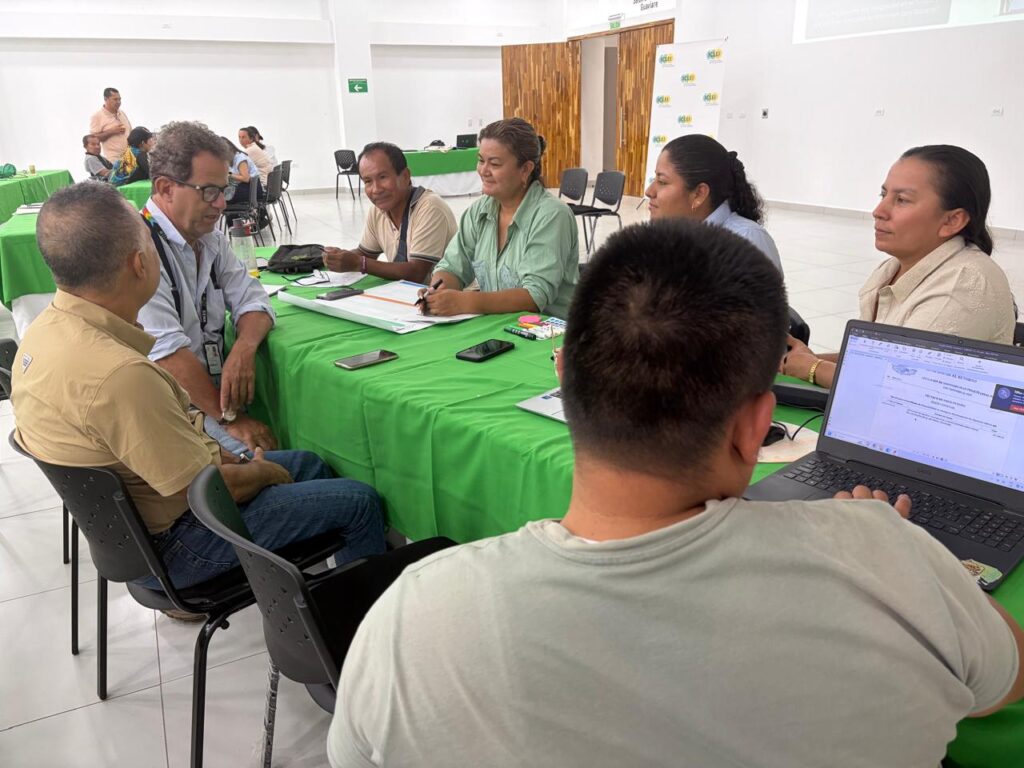
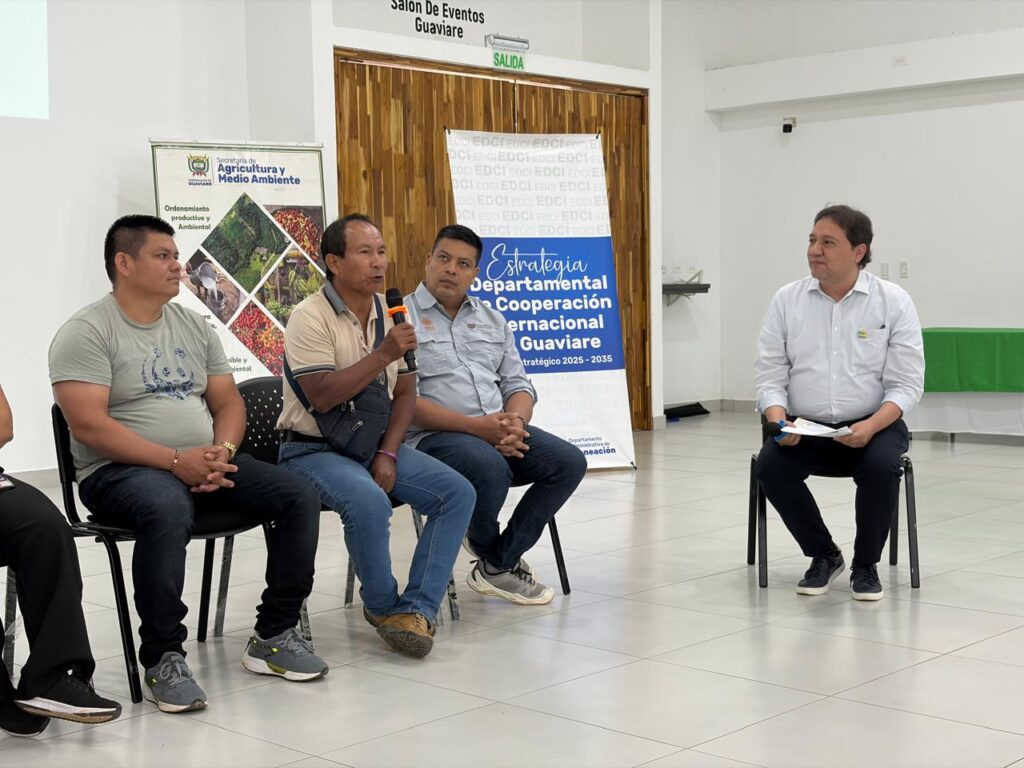
The program also included the Amazon-Catalonia Laboratory, a practical session dedicated to reflecting on methodologies, tools and approaches to incorporate these perspectives into territorial climate governance policies, programs and instruments.
The participants worked in groups that brought together representatives from Catalonia, Amapá and Guaviare, sharing learnings and identifying common opportunities and challenges.
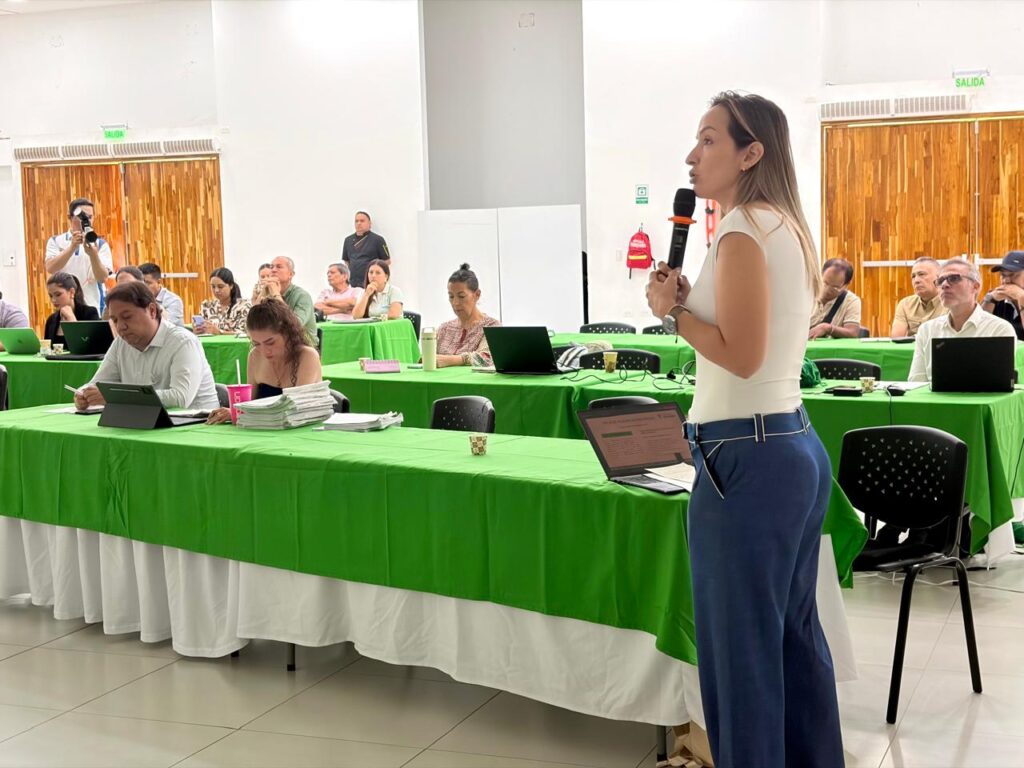
For Kelly Johanna Castañeda Ruiz, Secretary of Agriculture and Environment for Guaviare, it is essential to include diverse perspectives, voices, and stakeholders from across the region, as this allows for the development of socially validated, technically viable, and culturally rooted responses. “In the face of the climate crisis, it is fundamental to involve Indigenous peoples, rural communities, and various institutions to build concrete and impactful actions,” she emphasized.
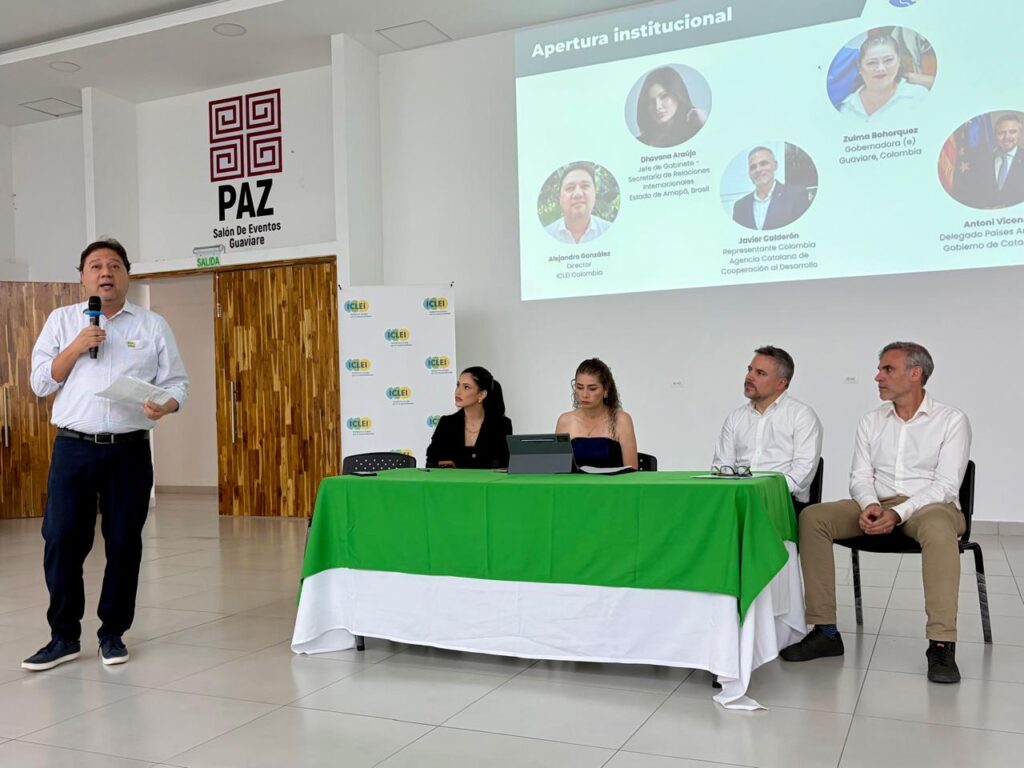
Cooperation between territories
Another central theme of the meeting was international cooperation. Representatives from Amapá, Guaviare, and Cataluña shared priorities, challenges, and opportunities to strengthen joint work between the territories.
For the department of Guaviare, the project also marks the beginning of a history of cooperation with ICLEI. Meanwhile, in Amapá, the workshop builds upon an alliance that has been developing in recent years on various fronts, including support for the state's participation in international climate conferences, climate planning through prioritization and the development of a project portfolio, training, governance strengthening, and other joint initiatives aimed at strengthening sustainable public policies.
The proposal stems from the understanding that the climate challenges facing the Amazon demand responses connected to local realities, but also strengthened by exchange between different territories and by the construction of cooperation networks.
By bringing together experiences from Brazil, Colombia, and Catalonia, the project seeks to expand institutional capacities, promote knowledge exchange, and generate inputs for territorially appropriate policies and strategies.
From debate to experience in the territory
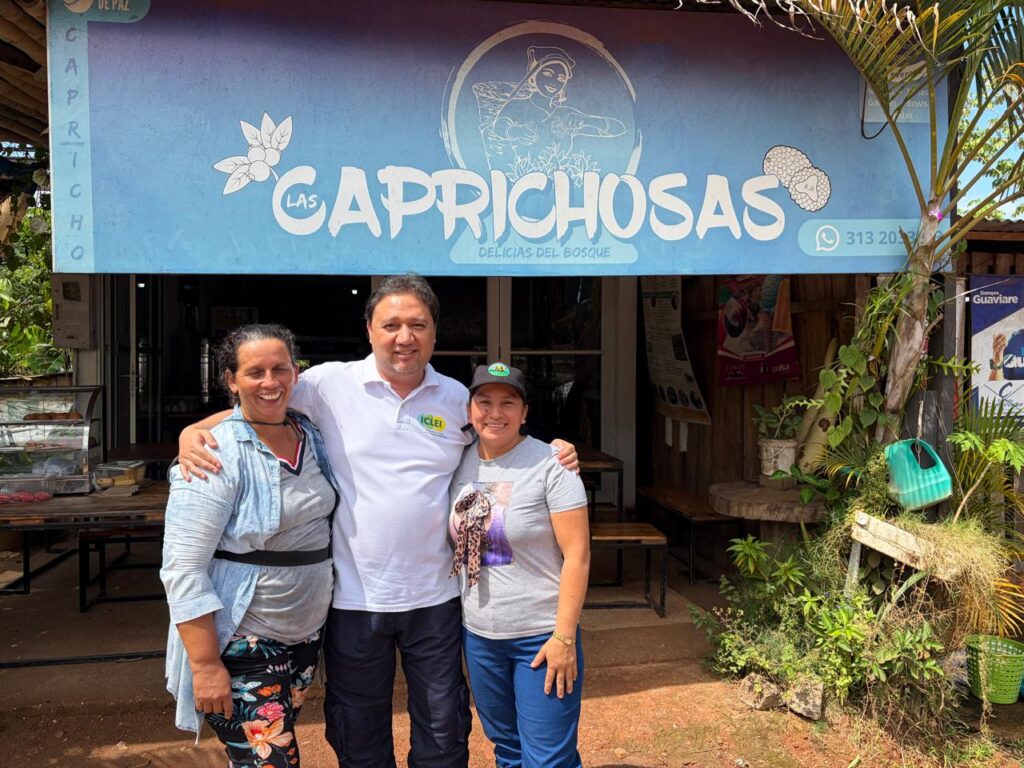
The third and final day was dedicated to a technical visit, bringing the discussions developed throughout the workshop closer to practical experiences and the context of the host territory.
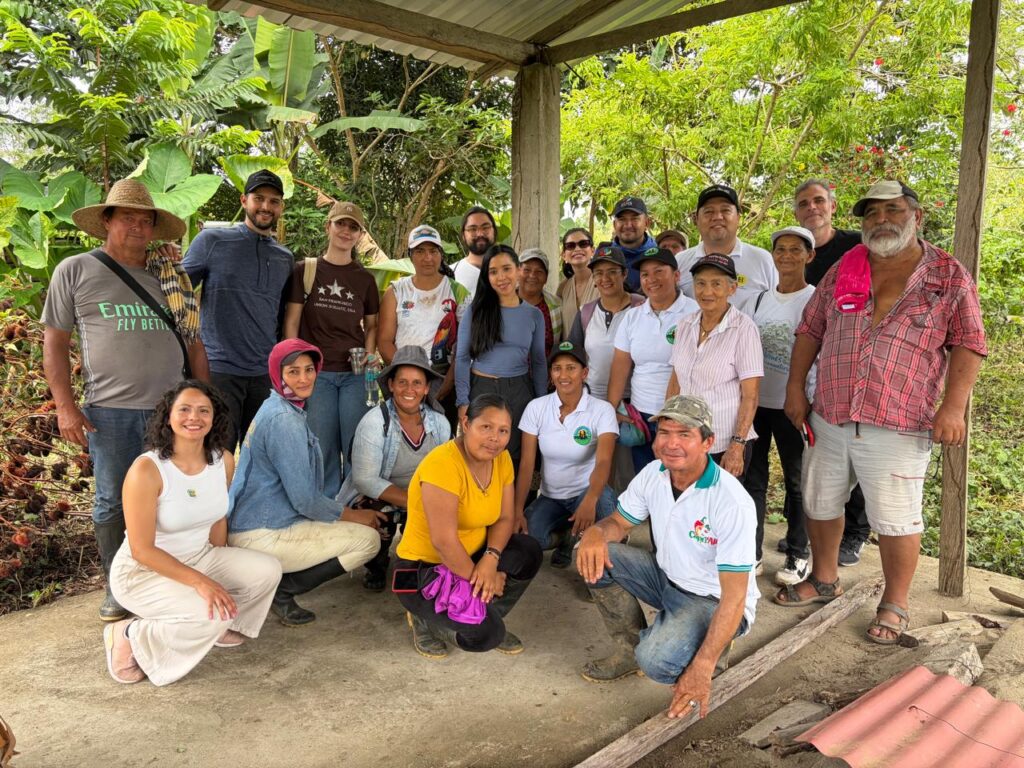
The activity aimed to strengthen peer learning and connect the knowledge shared during the meeting with concrete possibilities for application in the territories. We were fortunate to have the important support of the Governor's Office, as well as the community associations Asojoter and Asofaprocagua, and the Foundation for Conservation and Sustainable Development (FCDS).
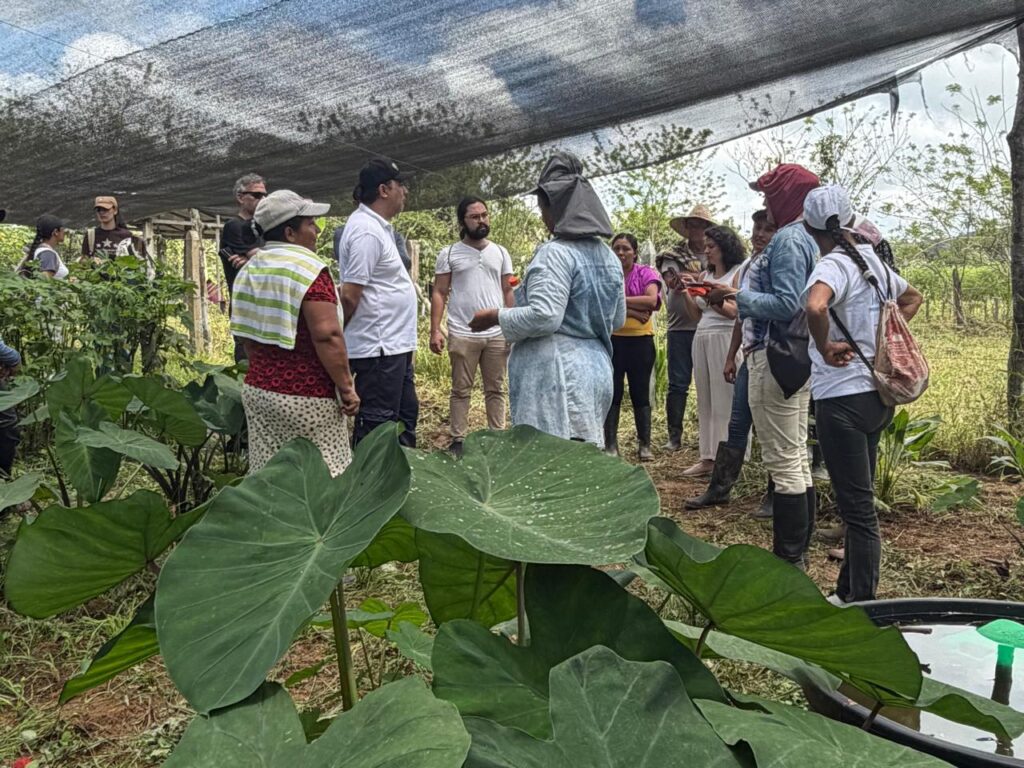
Over the three days, the Guaviare Territorial Workshop brought together diagnosis, dialogue, cooperation, and local experience. The lessons learned, recommendations, and contributions developed during the meeting will be incorporated into the next steps of the project, strengthening the cooperation process between Catalonia, Amapá, and Guaviare. In the coming weeks, Amapá will host the second meeting, continuing the process of exchange and collective development among the participating territories.
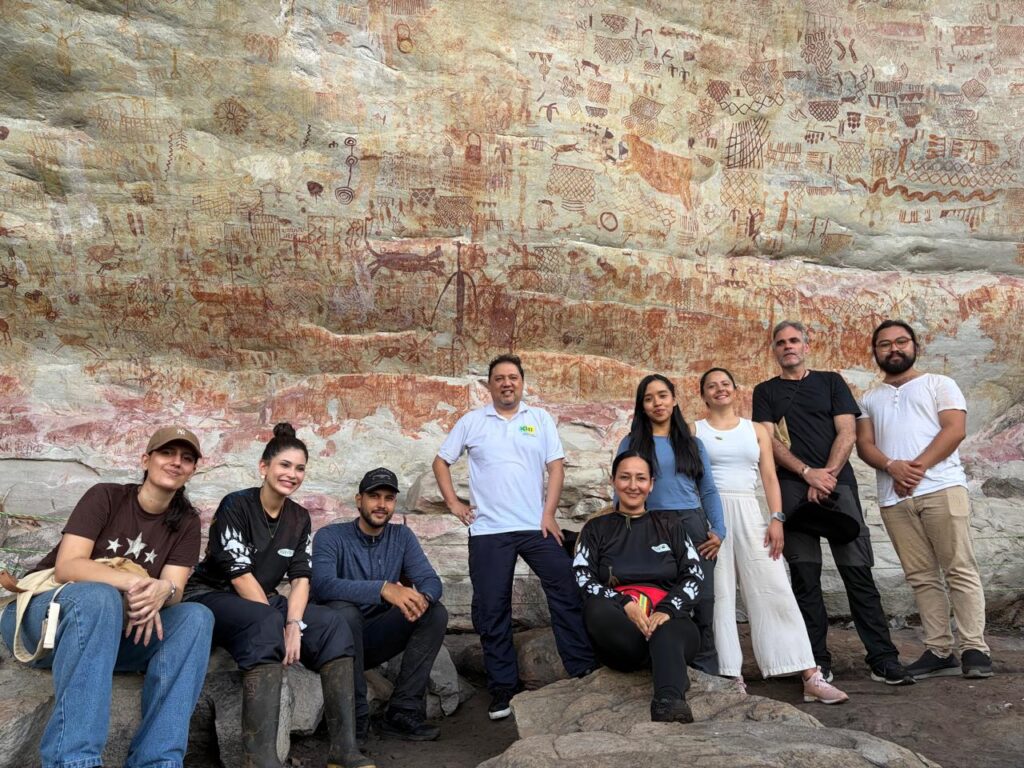
“The climate crisis knows no passports or borders; the climate crisis is global. And I believe that our humble role as Catalonia, as Catalan cooperation, is to try to facilitate that bridge,” reinforced Antoni Vicens, delegate of the Government of Catalonia in the Andean countries, also indicating his intention that this be the small beginning of a great journey focused on climate and the environment.
About the project
The Catalonia for the Amazon: Climate Justice and Equality project seeks to strengthen international cooperation between Catalonia, Amapá and Guaviare, promoting technical exchange, institutional coordination and the joint development of strategies to address the climate crisis in the Amazonian territories.
The initiative focuses on strengthening the institutional capacities of subnational governments, promoting climate justice, and expanding opportunities for international cooperation, integrating the perspectives of human rights, gender equality, and territorial development.
 Español de Colombia
  Português do Brasil
  English (UK)